Chhattisgarh Sets National Benchmark in Water Conservation under “Jal Sanchay–Jan Bhagidari 2.0”
Feb 20th, 2026 7:59 pm | By ThenewsmanofIndia.com | Category: LATEST NEWS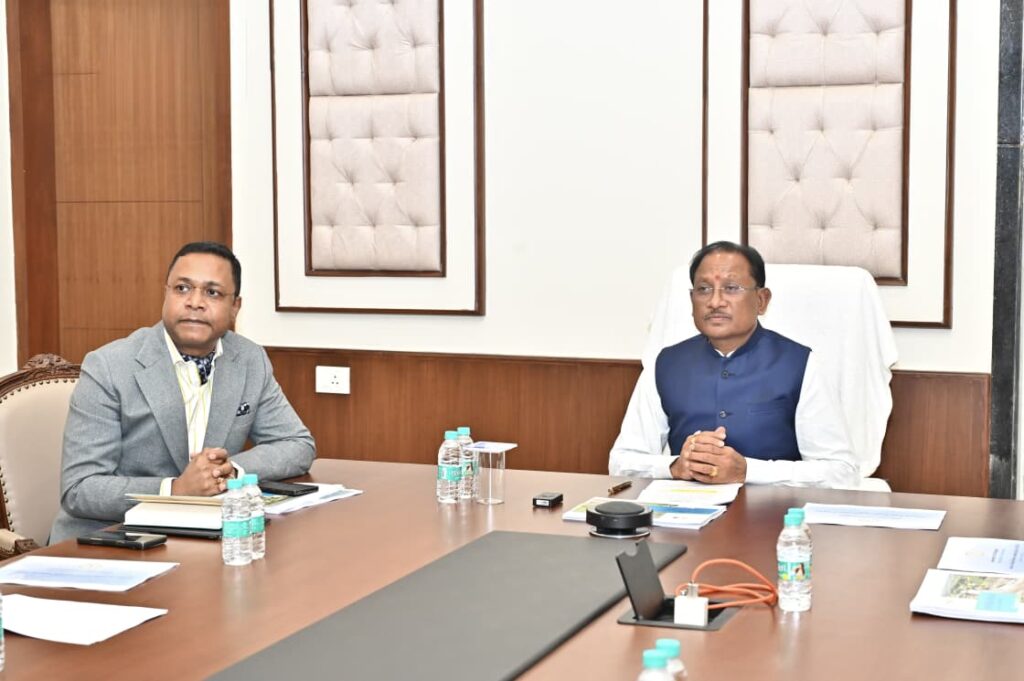
By THE NEWSMAN OF INDIA.COM| In a strong reaffirmation of its commitment to sustainable water management, Chhattisgarh has emerged as a frontrunner in the national water conservation movement under the “Jal Sanchay–Jan Bhagidari 2.0” campaign. The review meeting of the campaign was jointly chaired by Chief Minister Vishnu Deo Sai and Union Jal Shakti Minister C. R. Patil, highlighting the state’s proactive and people-centric approach toward water security.
During the meeting, the Chief Minister emphasized that water conservation in Chhattisgarh is not merely a government scheme but a growing mass movement. He reiterated the state government’s resolve to transform water preservation into a जनआंदोलन (people’s movement), ensuring that communities actively participate in safeguarding this vital resource. Through Jan Bhagidari (public participation), the state aims to build long-term water resilience and secure livelihoods, especially in rural and agrarian regions.
Ambitious Target with Ground-Level Impact
Chhattisgarh has set an ambitious target of constructing 10 lakh water structures by May 31, 2026. This massive initiative includes the development of farm ponds (डबरी निर्माण), check dams, and other small-scale water harvesting systems that directly benefit farmers and rural households.
The campaign goes beyond physical infrastructure. With geotagging of water bodies, the state is ensuring transparency, real-time monitoring, and accountability. This technology-driven approach allows accurate tracking of assets and effective planning for long-term sustainability.
Another innovative measure is the introduction of Water Budgeting, which encourages scientific assessment and optimal utilization of available water resources. By aligning water availability with agricultural and domestic needs, Chhattisgarh is promoting responsible consumption and efficient irrigation practices.
“Jal Mitra” Initiative: Empowering Communities
A notable feature of the campaign is the “Jal Mitra” initiative, designed to involve local citizens as water ambassadors. These community volunteers play a critical role in spreading awareness, monitoring water structures, and motivating villagers to adopt water-saving practices. This model strengthens grassroots participation and fosters collective responsibility for natural resources.
The combined effect of these initiatives is expected to significantly improve groundwater levels across the state. For farmers, this translates into enhanced irrigation capacity, improved crop yields, and additional income opportunities, reinforcing rural prosperity.
National Recognition for State Efforts
Union Jal Shakti Minister C. R. Patil appreciated Chhattisgarh’s sustained efforts and innovative interventions in the water conservation sector. He acknowledged that the state’s integrated approach — blending technology, community participation, and administrative efficiency — serves as a model for other states.
Rajesh Sukumar Toppo, IAS, Secretary, Water Resources, Government of Chhattisgarh, was also present during the review meeting, underscoring the administrative coordination driving the campaign’s success.
A Model for Water Security
Chhattisgarh’s contribution to “Jal Sanchay–Jan Bhagidari 2.0” demonstrates how political will, community engagement, and technological innovation can converge to address one of the country’s most pressing challenges — water security. By setting a large-scale target, empowering citizens, and prioritizing sustainable groundwater management, the state is not only strengthening its own resilience but also contributing meaningfully to India’s broader water conservation mission.
As the campaign progresses toward its 10 lakh water structure milestone, Chhattisgarh stands as a shining example of how collective action can transform water conservation into a true people’s movement.
Disclaimer:
This report is based on official statements and available information. Readers may refer to concerned authorities for detailed and updated information.