Madhya Pradesh’s Jal Ganga Samvardhan Abhiyan Wins Global Acclaim, Emerges as a Model for Water Conservation
Jun 8th, 2026 3:17 pm | By ThenewsmanofIndia.com | Category: SPECIAL NEWS COVERAGE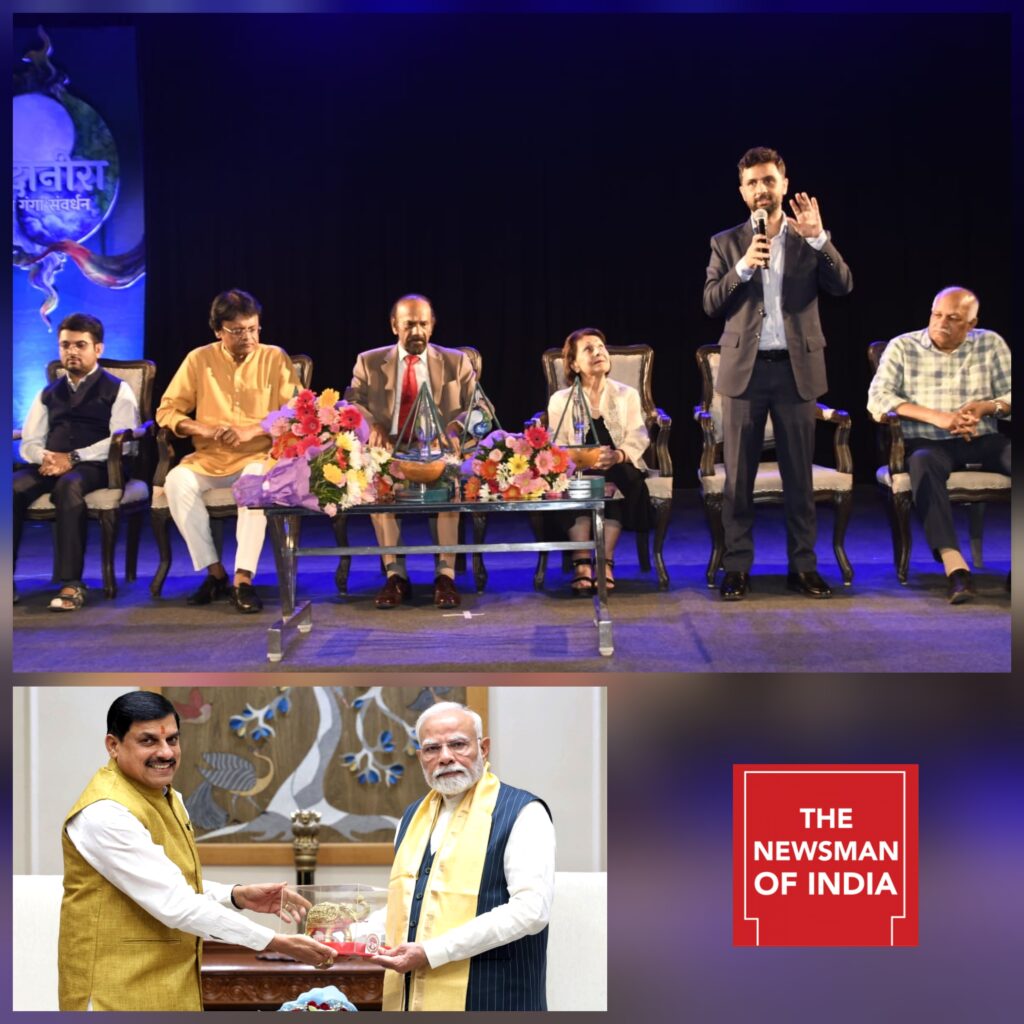
By Abul Hasan|THE NEWSMAN OF INDIA.COM|
Diplomats from Six Nations Praise the ‘Madhya Pradesh Model’; Express Interest in Replicating Community-Driven Water Management Initiatives
Madhya Pradesh’s Jal Ganga Samvardhan Abhiyan has gained international recognition as diplomats from Cyprus, Fiji, Mexico, Nepal, Trinidad and Tobago, and Ecuador lauded the state’s innovative, people-centric approach to water conservation and expressed interest in adopting similar models in their own countries.
Madhya Pradesh is steadily emerging as a global example of how community participation can transform water conservation into a powerful movement for sustainable development. What began as the Jal Ganga Samvardhan Abhiyan, inspired by the vision of Prime Minister Narendra Modi and spearheaded by Chief Minister Dr. Mohan Yadav, has evolved into one of India’s most significant public campaigns for the revival of rivers, ponds, stepwells, and traditional water bodies.
The growing impact of the initiative was evident during the ‘Sadanira Samagam’ held at the iconic Bharat Bhavan in Bhopal, where diplomats representing six countries—Cyprus, Fiji, Mexico, Nepal, Trinidad and Tobago, and Ecuador—came together to discuss water security, environmental sustainability, and cultural heritage. The visiting dignitaries not only appreciated Madhya Pradesh’s innovative approach but also expressed a keen interest in adapting similar models in their own nations.
A Global Dialogue on Water and Culture
Addressing the gathering, Evagoras Vryonides, High Commissioner of Cyprus, described water scarcity as one of the most pressing challenges facing humanity. He emphasized that long-term solutions require public awareness and active citizen engagement. Appreciating the dialogue initiated by Veer Bharat Nyas, he also announced that a cultural delegation from Cyprus would visit Bhopal on June 20–21, 2026, further strengthening cultural ties between the two regions.
Representing Fiji, High Commissioner Jagnnath Sami underlined the growing threat posed by climate change and noted the enduring friendship between India and Fiji since 1948. He praised the leadership of Chief Minister Dr. Mohan Yadav and observed that although the two countries are separated by oceans, they share common concerns regarding environmental preservation and the welfare of future generations.
Shared Civilisational Values, Shared Environmental Responsibility
For Vanessa Adrian, Head of Culture at the Embassy of Mexico, the event represented an important convergence of environmental consciousness and cultural identity. She noted that India and Mexico, both inheritors of ancient civilisations, have much to learn from each other in developing sustainable solutions for water management. Water conservation, she stressed, is not merely a local issue but a shared global responsibility.
Echoing similar sentiments, Deepak Pokharel, First Secretary at the Embassy of Nepal, spoke of the deep cultural and social bonds between India and Nepal. Recalling his visit to Bhopal’s Tribal Museum, he remarked that the traditions and values of both countries are remarkably alike, making India feel like an extension of his own homeland. He described the event as a timely reminder of humanity’s collective duty towards nature.
Interest Beyond Borders
The enthusiasm generated by the Madhya Pradesh initiative extended beyond appreciation. Chandradath Singh, High Commissioner of Trinidad and Tobago, commended the organisers for using culture as a medium to communicate environmental concerns, calling it an effective way to inspire public action and global responsibility.
Perhaps the most concrete endorsement came from Jorge Vinicio Anrango, Deputy Chief of Mission of Ecuador, who announced plans to explore organising a similar “Sadanira Sangam” in Ecuador. He praised the efforts of the Madhya Pradesh Government and Veer Bharat Nyas and said the campaign offered valuable lessons in mobilising communities for water conservation.
A People’s Movement Creating Lasting Impact
The participation of diplomats from Asia, Europe, North America, South America, and the Caribbean reflects the growing international visibility of Madhya Pradesh’s water conservation efforts. The campaign’s success lies not only in government intervention but in the active involvement of citizens who have embraced water stewardship as a shared responsibility.
The results are already visible. More than 2.12 lakh water conservation structures have been completed across the state, with the government aiming to expand this number to 3.66 lakh structures. These achievements are helping strengthen water security while creating a replicable model for sustainable resource management.
As the Jal Ganga Samvardhan Abhiyan continues to gain momentum, Madhya Pradesh is not merely conserving water—it is demonstrating how collective action, cultural consciousness, and visionary leadership can together shape a resilient future. Increasingly, the ‘Madhya Pradesh Model’ is being viewed not only as a state success story but as a global inspiration for water conservation and community-led environmental governance.