Minal Karanwal: Recognising Women as Architects of Climate-Resilient Agriculture
Sep 20th, 2026 5:38 pm | By ThenewsmanofIndia.com | Category: LATEST NEWS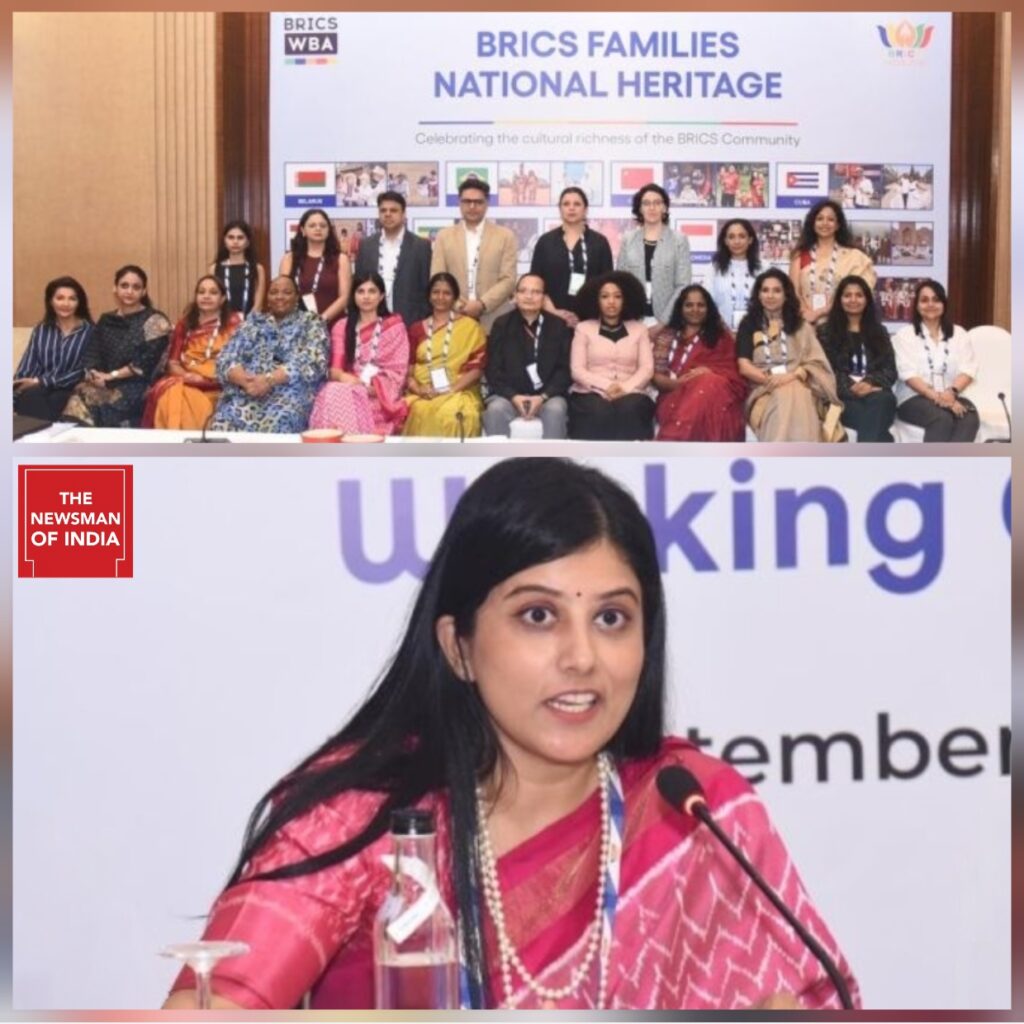
By THE NEWSMAN OF INDIA.COM| At the Women’s Business Alliance of BRICS, Minal Karanwal, IAS, had the opportunity to represent India on an international platform where conversations around women’s leadership, sustainability and economic resilience took centre stage. For Karanwal, the engagement also offered an opportunity to reflect on a field that has become an important part of her recent public service journey—agriculture.
An IAS officer of the Maharashtra cadre, Karanwal has spent the last five months working with the Government of Maharashtra on its Climate-Resilient Agriculture project. What began as an unexpected immersion into agriculture has evolved into a deeper understanding of a system that touches almost every aspect of everyday life.
Agriculture is not merely an economic activity. It is the system that feeds communities, sustains livelihoods and supports a significant part of the economy. Yet, beneath this essential role lie vulnerabilities arising from changing climate patterns, water stress, soil degradation and other pressures that increasingly affect farming communities.
Karanwal’s experience has involved understanding agriculture from the ground up and identifying gaps where interventions can strengthen resilience. Her BRICS engagement, however, brought another dimension into focus—the role of women in creating climate-resilient agricultural ecosystems.
The Invisible Leadership of Women
One of the most striking observations emerging from Karanwal’s reflections is how deeply women already influence agricultural systems, even when their contribution remains insufficiently recognised.
Women participate in decisions relating to nutrition, crops, sowing and harvesting. They influence choices around biofertilisers and biopesticides and carry an intimate understanding of soil, food, seasons and household requirements.
Much of this knowledge is acquired through experience and passed across generations rather than recorded in formal systems.
This prompted Karanwal to draw an insightful parallel with matriarchal elephant groups. Older female elephants are known for their extensive knowledge of landscapes, including routes to water and fodder and ways of navigating difficult seasons. Such accumulated knowledge can be crucial to the survival of the herd.
Human communities, too, have their own repositories of knowledge. Within many agricultural communities, women are among those who preserve, practise and transmit this knowledge.
Recognising this contribution can broaden the way policymakers approach climate resilience.
From Ground-Level Knowledge to Institutional Recognition
Maharashtra’s Women Farmer Bill represents an important step towards formally recognising women’s role in agriculture. By recognising women as farmers, providing certification and enabling access to formal credit, the initiative seeks to give institutional recognition to a role that women have been performing for generations.
For Karanwal, however, the larger lesson extends beyond legislation.
Recognition is also about acknowledging women as knowledge-holders and decision-makers. Their leadership is not confined to formal offices or policy forums. It exists on farms, within households and across rural communities, where everyday decisions can influence agricultural practices and resilience.
This perspective has important implications for governance. Policies designed to strengthen climate resilience can become more responsive when they incorporate the knowledge and lived experiences of the people who directly interact with land, water, crops and changing seasons.
Women and the Future of Climate Resilience
The BRICS platform provided Karanwal with an opportunity to place these grassroots realities within a wider international conversation on women’s leadership.
Her reflections point towards a broader understanding of resilience. Climate resilience is not simply about deploying new technologies or developing new agricultural techniques. It is also about recognising existing knowledge, strengthening community institutions and ensuring that people who have traditionally carried this knowledge are included in decision-making.
Women’s leadership in agriculture therefore has implications far beyond gender representation. It intersects with food security, sustainability, rural livelihoods and climate adaptation.
As agriculture confronts an increasingly uncertain environmental future, the experience and knowledge embedded within communities can become an important resource for policymakers.
Karanwal’s journey through Maharashtra’s climate-resilient agriculture initiative offers a compelling reminder that some of the solutions to tomorrow’s challenges may already exist within communities today.
The task is to recognise them, document them, strengthen them and bring them to the table.
And in that journey, recognising women—not merely as participants, but as farmers, leaders and custodians of knowledge—can be an important step towards building more resilient agricultural systems, communities and ecosystems.
Source Note: This feature article has been prepared in good faith based on a LinkedIn post shared by Minal Karanwal, IAS, reflecting on her participation in the Women’s Business Alliance of BRICS and her experience with climate-resilient agriculture in Maharashtra. The article presents her reflections in a journalistic and contextualised manner.