Empowering Women, Strengthening Water Governance: Madhya Pradesh’s Amrit Mitra Initiative
Aug 8th, 2026 6:16 pm | By ThenewsmanofIndia.com | Category: LATEST NEWS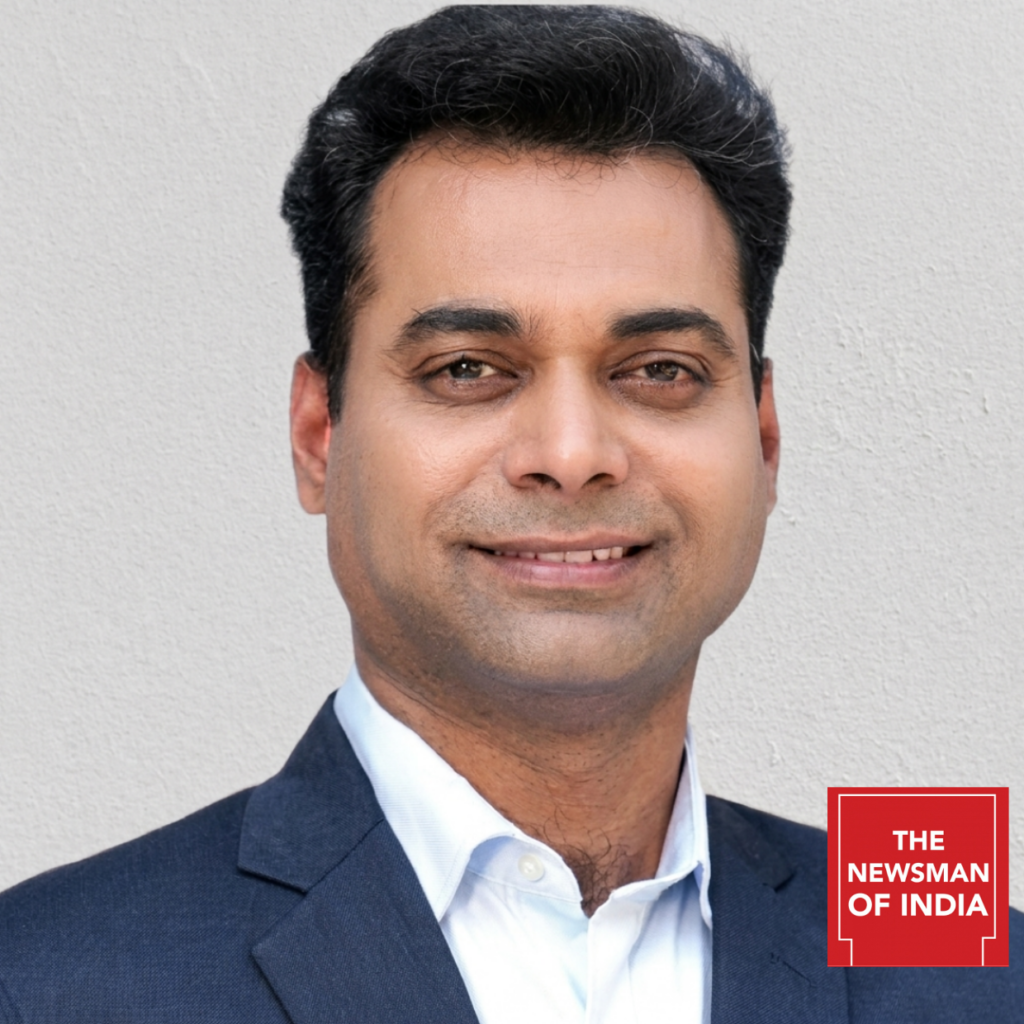
By THE NEWSMAN OF INDIA.COM|Women at the Heart of Water Governance: Madhya Pradesh’s Amrit Mitra Model Sets a New Benchmark, Urban Administration Department Empowers Women’s Self-Help Groups to Take Responsibility for Water Distribution and Community Infrastructure
Madhya Pradesh is giving a new dimension to urban water management by placing women’s Self-Help Groups (SHGs) at the centre of water distribution and community infrastructure under the Amrit 2.0 Mission.
In a pioneering initiative, the Urban Administration and Development Department, Madhya Pradesh, has launched the country’s first pilot project in which women members of Self-Help Groups are being trained and entrusted with responsibilities related to water distribution systems. The initiative reflects a progressive approach that combines efficient public service delivery with women’s empowerment and community participation.
The initiative is being implemented under the guidance of Sanket S. Bhondve, IAS (2007), Commissioner, Urban Administration and Development, Madhya Pradesh, whose emphasis on innovative, participatory and people-centric urban governance has helped give momentum to this distinctive model.
Women Becoming Partners in Water Management
Under the pilot project, selected women from Self-Help Groups are being provided specialised training in areas such as water distribution management, leak detection, pipeline maintenance and related field-level activities. The objective is not merely to create employment opportunities, but to develop a trained community-based workforce capable of contributing directly to the efficient management of essential urban services.
In the first phase, 36 women have been selected, with women from Indore and Bhopal being brought into the programme. Their training and involvement are expected to strengthen the last-mile delivery of water services while creating a greater sense of ownership among communities.
The model represents an important shift from conventional service delivery towards community-led urban governance, where citizens—particularly women—become active stakeholders in maintaining essential infrastructure.
From Infrastructure Creation to Community Ownership
The significance of the initiative becomes even more apparent in the wider implementation of Amrit 2.0 in Madhya Pradesh. According to the department, 482 projects under the mission have already involved women from Self-Help Groups in activities including water-quality testing, park maintenance and tree plantation.
This demonstrates that the participation of women is not being treated as an isolated intervention but as part of a broader strategy to integrate Self-Help Groups into urban development.
By equipping women with technical skills and responsibilities, the department is simultaneously addressing two important objectives—improving municipal service delivery and strengthening women’s economic and social participation.
A Model with Potential for Nationwide Replication
The Madhya Pradesh model has attracted attention because of its potential to be replicated across the country. Preparations are reportedly underway to take this model beyond the state, indicating the confidence placed in its community-oriented approach.
The initiative also aligns strongly with the larger objectives of Amrit 2.0, which seeks to improve water supply, strengthen urban water infrastructure and promote sustainable water management. By bringing trained women into the operational ecosystem, Madhya Pradesh is demonstrating how national urban missions can be translated into grassroots participation.
Sanket S. Bhondve’s Focus on Innovative Urban Governance
As Commissioner of Urban Administration and Development, Sanket S. Bhondve, IAS, has been associated with efforts to make urban governance more responsive, participatory and outcome-oriented. The Amrit Mitra initiative is a notable example of how administrative innovation can connect infrastructure development with social empowerment.
The decision to engage Self-Help Group members in technically oriented responsibilities also reflects an understanding that sustainable public infrastructure depends not only on government investment but also on trained people, community ownership and continuous local participation.
Empowerment Beyond Employment
The real strength of the Amrit Mitra initiative lies in its ability to go beyond the traditional understanding of women’s empowerment.
A woman trained to identify a water leakage, understand the functioning of a pipeline network, participate in water-quality monitoring or contribute to the maintenance of public assets is not merely receiving livelihood support. She is acquiring technical knowledge, responsibility and a direct role in the functioning of her city.
This approach can potentially create a multiplier effect. As women gain experience and confidence, they can become local resource persons, community representatives and partners in ensuring the sustainability of urban infrastructure.
A Progressive Chapter in Madhya Pradesh’s Urban Development Journey
The Amrit Mitra initiative showcases how effective administration can transform a government programme into a people-driven development model.
The efforts of the Urban Administration and Development Department, combined with the leadership and administrative vision of Sanket S. Bhondve, demonstrate that urban development can simultaneously pursue infrastructure improvement, women’s empowerment and community participation.
If expanded successfully, the model could offer a valuable template for other states seeking to strengthen water governance while creating meaningful opportunities for women.
Madhya Pradesh’s Amrit Mitra initiative therefore stands out not simply as a water-management project, but as an innovative experiment in inclusive urban governance—where women are not just beneficiaries of development, but active partners in building and sustaining it.