IAS e-Civil List 2026: A Digital Leap Towards Smarter Governance and Administrative Excellence
Jun 22nd, 2026 8:25 pm | By ThenewsmanofIndia.com | Category: SPECIAL NEWS COVERAGE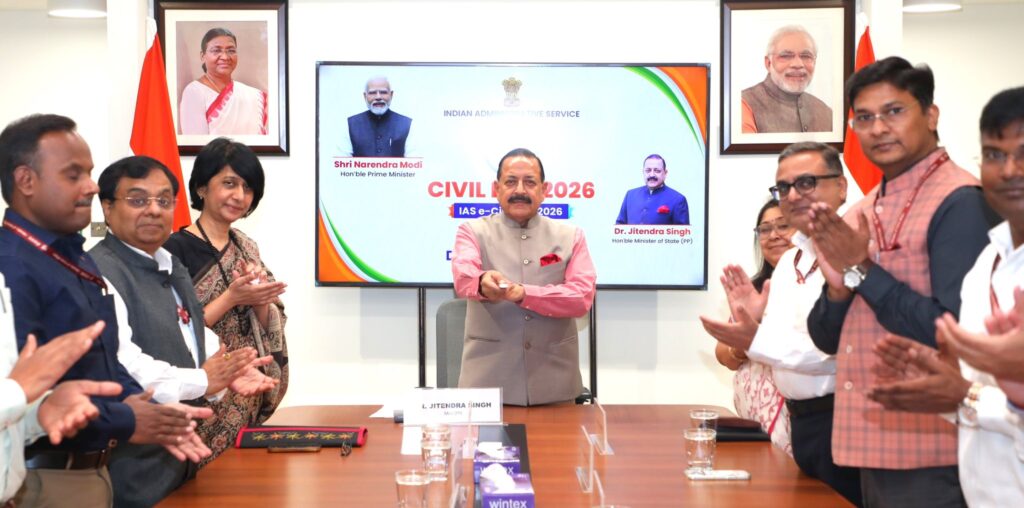
By THE NEWSMAN OF INDIA.COM| In a notable step towards strengthening digital governance and administrative efficiency, the Department of Personnel & Training (DoPT) has launched the IAS e-Civil List 2026, marking another milestone in the Government of India’s commitment to the Digital India mission. The latest edition is not merely a directory of officers; it is a comprehensive governance tool designed to support informed decision-making, talent mapping and effective cadre management across the country.
The IAS e-Civil List 2026 is the 71st edition of the Civil List and the sixth edition to be published exclusively in digital PDF format. The transition from bulky printed volumes to a fully digital platform reflects the government’s emphasis on modernisation, accessibility and sustainability. By embracing technology, the DoPT has transformed a traditional administrative document into a dynamic and user-friendly resource for policymakers, administrators, researchers and institutions.
One of the most noteworthy features of the IAS e-Civil List 2026 is its advanced search functionality and extensive hyperlinking capability. These features enable users to quickly access detailed information about IAS officers with just a few clicks, significantly improving the efficiency of information retrieval. The digital format ensures that critical administrative data is readily available anytime and anywhere, reducing dependency on physical records and enhancing operational convenience.
The e-Civil List contains comprehensive details of IAS officers serving across various cadres in the country. Information available includes batch details, cadre allocation, present postings, pay levels, educational qualifications and dates of superannuation. Such detailed profiling of officers makes the platform an invaluable reference for administrative planning and human resource management.
Beyond individual officer profiles, the e-Civil List also offers critical insights into cadre-wise strength, projected retirements over the next five years and the number of officers inducted through the Civil Services Examination. These data points are essential for long-term workforce planning, succession management and policy formulation. Governments at the Centre and in the States can utilise this information to anticipate administrative requirements and make timely decisions regarding appointments and deployments.
The digitalisation of the Civil List represents a major advancement in transparency and governance. Easy access to information regarding officers’ qualifications, experience, expertise and current assignments allows decision-makers to identify suitable officers for specialised assignments and leadership roles. This technology-driven talent mapping capability is expected to significantly enhance the effectiveness of public administration by ensuring that the right expertise is deployed where it is needed most.
The IAS e-Civil List 2026 also supports evidence-based governance. In an era where data-driven decision-making is becoming increasingly important, the platform provides a reliable repository of administrative information that can aid strategic planning and institutional development. By facilitating informed choices regarding postings, cadre management and succession planning, it contributes to a more responsive and efficient administrative framework.
Importantly, the initiative aligns seamlessly with the broader objectives of Digital India. It demonstrates how digital transformation can simplify administrative processes, improve accessibility and strengthen institutional efficiency. The move away from printed editions also reflects a commitment to environmental sustainability through reduced paper consumption.
The launch of the IAS e-Civil List 2026 underscores the Government of India’s vision of leveraging technology to modernise governance structures. As a repository of administrative talent and institutional knowledge, the e-Civil List serves as a critical bridge between data and decision-making. It not only enhances transparency and accessibility but also empowers governments and institutions to utilise the vast pool of IAS talent more effectively.
In many ways, the IAS e-Civil List 2026 is more than a digital publication. It is a strategic governance instrument that reflects the evolving nature of public administration in India—one that is increasingly driven by technology, data and informed decision-making. By providing a comprehensive, searchable and accessible database of the country’s premier administrative service, the initiative is poised to strengthen governance, improve administrative planning and contribute to the nation’s ongoing journey towards excellence in public service.
This feature highlights the significance of the IAS e-Civil List 2026 as a transformative governance and talent-management tool under the Digital India initiative.