JNPA Marked Air Quality Improvement Following Implementation of Green Initiatives
Jan 17th, 2026 7:24 pm | By ThenewsmanofIndia.com | Category: LATEST NEWS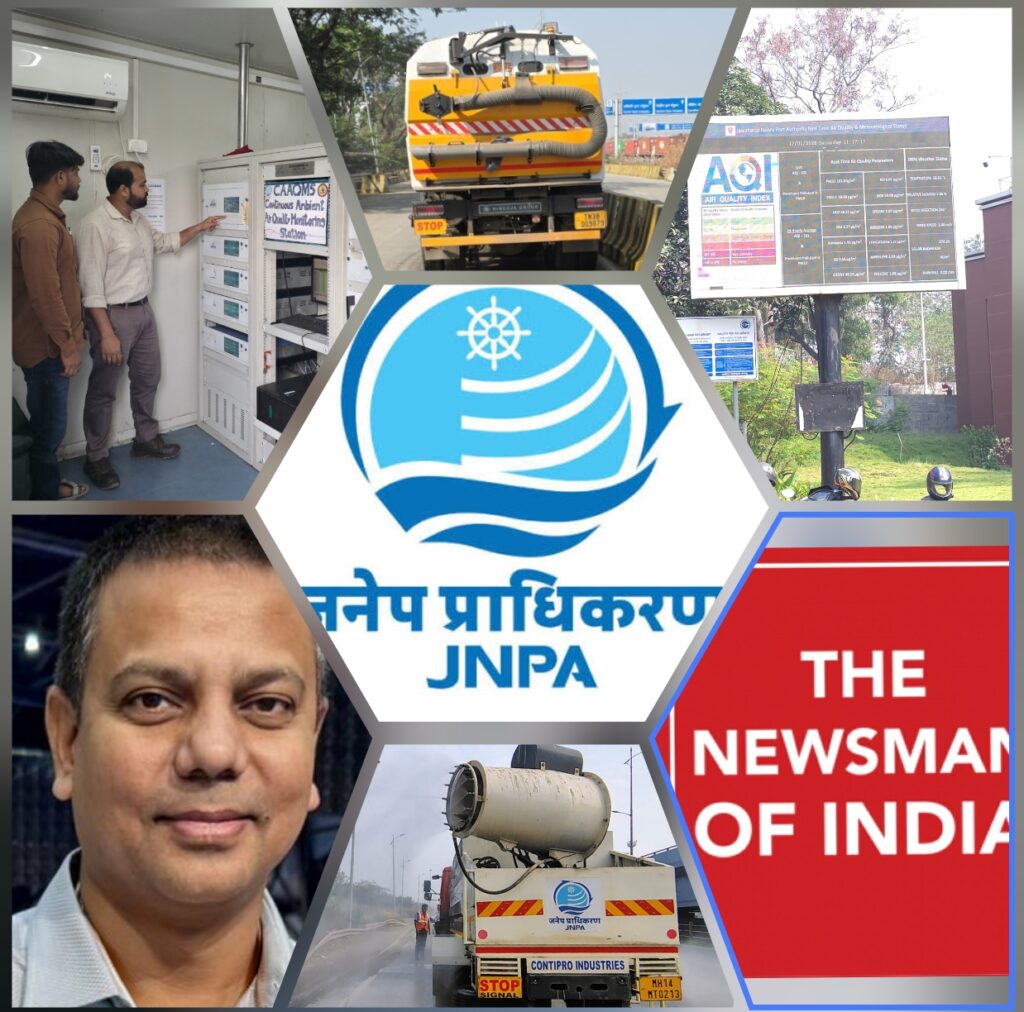
Mumbai, January 16th, 2026: Jawaharlal Nehru Port Authority (JNPA)- India’s largest container port, has reported a continued improvement in ambient air quality across its operational areas. A comparison of recent Air Quality Index (AQI) data shows a positive trend, with the AQI improvement. This sustained reduction reflects the effectiveness of JNPA’s systematic environmental interventions and proactive monitoring mechanisms. From October to December, PM10 levels showed a consistent improvement compared to last year. in November and December the reduction was significantly roughly 33% and 29%, respectively—indicating a substantial drop in dust-related pollution during peak winter months. PM2.5 levels followed a mixed pattern. dropped by around 25% in November, showing clear improvement Overall, the data indicates that while larger particulate pollution reduced strongly over the season. The improvement in air quality follows the deployment of mechanized road dust cleaning vehicles and dust suppression machines across key operational zones within the port deployed in October 2025. These measures form an integral part of JNPA’s comprehensive environmental management system and its broader green port strategy. Dust mitigation initiatives are being implemented across internal port roads, container terminals, parking areas and other identified dust-pollution hot spots. Special emphasis has been placed on the Karal–South Gate route, which has been identified as a high-priority stretch due to sustained container truck movement. Expressing his views on the improved AQI, Gaurav Dayal, IAS, Chairperson, JNPA, said, “The focus of Jawaharlal Nehru Port Authority is not limited to port operations alone, but also on the quality of life in surrounding areas. The improvement in air quality is the result of sustained on-ground measures to control dust and emissions across the port and approach roads. Going forward, JNPA is expanding its environmental actions to include water quality monitoring, improved waste handling and cleaner operating practices, so that port growth takes place in a balanced and responsible manner, benefiting both the port workforce and neighbouring communities.” To scientifically assess air quality and measure the impact of these interventions, JNPA operates a Continuous Ambient Air Quality Monitoring System (CAAQMS) station at the designated Point of Concern within the port area. The station provides real-time monitoring of PM₁₀, PM₂.₅, key gaseous pollutants and meteorological parameters, enabling data-driven decision-making. JNPA has established a state-of-the-art in-house environmental laboratory to ensure robust monitoring of air, water and other ecological parameters across the port ecosystem. In line with global best practices, the Authority is actively working towards obtaining NABL accreditation, reinforcing its commitment to data integrity, transparency and sustainable port operations.
E-Mobility
JNPA has begun transitioning to cleaner mobility by introducing electric and alternative fuel vehicles across its operations. Currently, 10 electric cars and 52 CNG cars are in use, along with 53 electric trucks operating in container yards supported by battery swapping stations. The electric vehicle ecosystem is being strengthened with two battery swapping stations and six charging points already in place. Looking ahead, JNPA plans to deploy over 150 electric trucks by December 2026, while the conversion of its official cars and buses to electric is underway. To further support wider adoption, three acres of land will be allotted for developing a battery swapping facility for common use, and an Expression of Interest (EoI) will be issued to invite additional battery swapping stations.
Centralised Command & Control System for Traffic Management:
To further reduce congestion on port roads, JNPA is planning to develop a Centralised Command & Control System for integrated traffic management. The system will enable real-time monitoring and regulation of traffic movement through cameras installed across all major JNPA routes, including empty yards, terminal roads, NH-348, NH-348A, and other key port-bound roads. It will be supported by a GPS-based vehicle tracking system, allowing better coordination, faster response to congestion points, and smoother movement of cargo vehicles within and around the port area. In addition, 24/7 on-ground patrolling will be undertaken, with a dedicated team deployed to ensure continuous monitoring, quick intervention, and effective traffic enforcement across the port network.
CPP: Fuel & Emissions Savings
In FY 2025 (till date), the Centralised Parking Plaza has delivered measurable environmental and economic benefits by streamlining truck movement and reducing idling time within the port ecosystem. This has resulted in diesel savings of over ₹12.9 crore, along with a reduction of approximately 3.65 million kilograms of carbon emissions. The initiative demonstrates how improved traffic planning and operational efficiency can play a critical role in lowering fuel consumption, cutting emissions, and advancing more sustainable port operations.
JNPA is accelerating its green transition with a comprehensive programme that places the port significantly ahead of national targets. JNPA has achieved 60% renewable energy share in 2025, reaching this milestone nearly five years ahead of the MIV 2030 goal.