Simplicity at the Centre of Power: The Quiet Strength of Dr. Mohan Yadav & People Around
Apr 19th, 2026 11:13 am | By ThenewsmanofIndia.com | Category: LATEST NEWS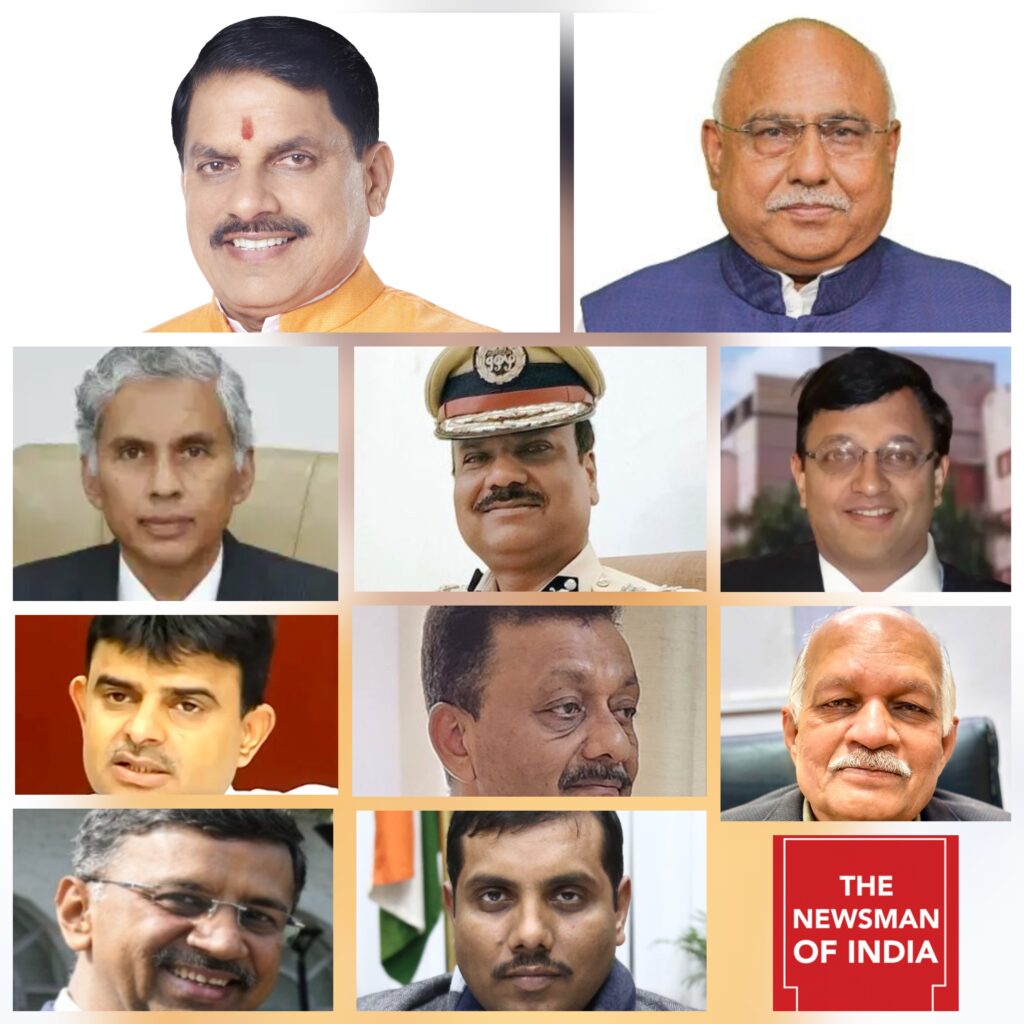
BY THE NEWSMAN OF INDIA.COM : In politics and governance, power often comes wrapped in spectacle—large entourages, public displays, and the constant pursuit of visibility. Yet, Madhya Pradesh today offers a strikingly different example. At the centre of this example stands Chief Minister Dr. Mohan Yadav, whose leadership reflects a rare combination of scholarship, simplicity, positivity, and quiet confidence.
Dr. Mohan Yadav is among the most educated and learned Chief Ministers in India. A lawyer by profession, he holds multiple academic qualifications, including an MBA, a PhD, and a Master’s degree in Political Science. His journey in public life began early when he won his first election in 1982 during the student union polls at Madhav Science College in Ujjain. Decades later, on 11 December 2023, he was chosen to serve as the 19th Chief Minister of Madhya Pradesh.
Despite occupying one of the most powerful constitutional offices in the state, Dr. Yadav remains known for his grounded personality and low-profile lifestyle. Soft-spoken and focused, he has consistently displayed a preference for substance over showmanship. Even personal family events, including marriage functions in his family, were conducted away from publicity and unnecessary grandeur—reflecting his belief that dignity lies in simplicity, not display.
This simplicity is not limited to the Chief Minister alone. It reflects across the ecosystem of leadership surrounding him—both in the government and the organisation. However, within the administration of Mohan Yadav and his party, there are numerous persons known for their simplicity and grounded approach. This article does not cover all of them; rather, it highlights a few representative individuals whose conduct reflects this shared ethos, offering a glimpse into a wider culture of understated leadership and quiet efficiency.
BJP’s Madhya Pradesh President Hemant Khandelwal is another strong example of understated leadership. A legislator from Betul, with qualifications in B.Com and LLB, Khandelwal is known for his calm organizational style and practical approach. His political life began with his election as Member of Parliament in the Betul-Harda Lok Sabha by-election, and over the years he has served as MLA, district president, state treasurer, and key election coordinator. Despite these important roles, he maintains a simple public presence and remains deeply connected to grassroots work, agriculture, dairy, and social service.
At the administrative helm stands Chief Secretary Anurag Jain, a 1989 batch IAS officer and the 35th Chief Secretary of Madhya Pradesh. With a B.Tech in Engineering and an MA in Public Administration from the USA, Jain represents competence without noise. From his early posting as Assistant Collector in Sagar to serving as Collector in Mandla, Mandsaur, and Bhopal, and later in senior positions both in the state and the Centre, he has maintained a reputation for efficiency and discipline rather than visibility.
Director General of Police Kailash Makwana, a senior IPS officer of the 1988 batch, follows the same tradition. An M.Tech graduate in Engineering, decorated with the President’s Meritorious Service Medal and Vishisht Seva Medal, Makwana has served in some of the most challenging policing assignments across Bastar, Dantewada, Mandsaur, and Betul. His leadership style is marked by professionalism and restraint rather than publicity.
Additional Chief Secretary Neeraj Mandloi, a 1993 batch IAS officer, is another pillar of this governance structure. Handling key responsibilities in urban development, finance, and as Secretary to the Chief Minister, Mandloi’s administrative depth is matched by his low-profile functioning. His work speaks louder than public appearances.
Principal Secretary Raghvendra Kumar Singh, a 1997 batch IAS officer, similarly brings quiet competence to governance. With academic qualifications in engineering and materials management, and extensive experience across industrial policy, investment promotion, administration, and district governance, he reflects the value of institutional seriousness over personal projection.
Dr. Shriram Tiwari, Advisor on Culture to the Chief Minister, reflects the same simplicity and quiet strength seen in Dr. Mohan Yadav’s team. He has served as Director of Culture, Director of Swaraj Sansthan, Managing Director of Vanya, and CMD of Udyam Vikas Sansthan, besides advising Chhattisgarh on culture, archaeology, and tourism. Known for his deep interest in literature, art, cinema, and tribal heritage, he has edited over 100 books. He also established the Vikramaditya Vedic Clock and continues to mentor young artists while maintaining a low public profile.
Officer on Special Duty Rajesh Kumar Hingankar, from the 2006 batch, serving as Officer on Special Duty in the Chief Minister’s Secretariat of Madhya Pradesh, is widely regarded for his simplicity and positive approach. Known for calm decision-making and accessibility, he brings clarity and balance to administrative work. His grounded personality and solution-oriented mindset foster trust among colleagues, making him an effective bridge between governance and public expectations.
Secretary to the Chief Minister Kaushlendra Vikram Singh, a 2010 batch IAS officer, is widely respected for his work in urban development and grievance redressal. His recent appointment reflects trust built through consistent performance rather than public positioning.
Manish Singh, a 2009 batch officer serving as Commissioner, Public Relations, and Secretary, Transport Department, also represents this same culture of responsible governance. Holding critical assignments without personal noise, he reflects a style where work remains the priority.
What makes this leadership model noteworthy is not merely administrative competence, but the shared culture of simplicity. In an era where public life is increasingly shaped by optics, Madhya Pradesh’s leadership under Dr. Mohan Yadav presents a different message—that authority can coexist with humility, and power can remain grounded.
This simplicity is not weakness; it is strength. It builds trust. It reduces distance between leadership and people. It allows governance to remain focused on outcomes rather than appearances.
Dr. Mohan Yadav and the team around him represent a rare example in contemporary politics—where high office is carried with lightness, where scholarship meets humility, and where positivity becomes a style of governance.
In many ways, the real power of Madhya Pradesh today lies not in visible authority, but in invisible discipline—the quiet dignity of those who lead without needing to announce it.
Disclaimer: This article is based on the personal observations and experience of the writer. Some parts of the information have also been sourced from official government websites and publicly available records.
Write to editor: mail@thenewsmanofindia.com