The Night Bhopal Choked: A Child’s Memory of the 1984 Gas Tragedy
Dec 2nd, 2025 10:10 pm | By ThenewsmanofIndia.com | Category: SPECIAL NEWS COVERAGE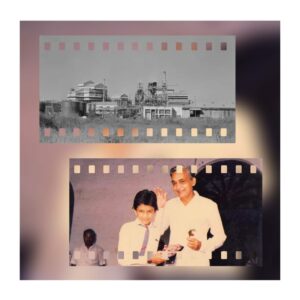
THE NEWSMAN OF INDIA.COM| Bhopal|The night of 2nd December 1984 remains etched in the collective memory of Bhopal — and even more deeply in the hearts of those who lived through it. For many, it is a chapter of history. For some, it is a haunting childhood memory, as vivid today as it was four decades ago.
We lived in Old Bhopal, in the 12 Mehal locality of Shahjahanabad. I was eight years old, a class-three student at Cambridge Higher Secondary School, Lower Eidgah Hills. It was a typical winter Sunday. After watching a Hindi film on Doordarshan — an Amol Palekar starrer, though the title escapes me now — we finished dinner and slipped under our quilts, trying to comfort ourselves against the December chill.
Around 3 a.m., I woke up with an unusual burning in my throat and nose. As I threw off the quilt, I saw a thin layer of smoke blanketing the room. My eyes began to burn sharply, and a strange liquid started oozing out. Within minutes, every member of the family awoke with the same complaint. Confusion gripped us, and so did fear.
Outside, neighbours were calling out anxiously. My mother instructed us to cover our faces and remain under the quilts. Amidst my discomfort, I heard two things very clearly: the incessant honking of panicked traffic and the terrifying, unabated siren from the Putha Mill on Chhola Road.
We struggled with cough and breathlessness for nearly half an hour. Then a policeman’s voice echoed from outside, urging residents to leave their homes and come into the open, assuring us the danger was under control. Even though the cold of December bit sharply, we were drenched in sweat when we stepped out. Chaos had overtaken the street — people coughing, crying, speculating.
Some claimed there had been a fire in a chilli godown. Others feared an explosion at the Union Carbide plant. We waited outside for nearly an hour till the noise gradually subsided. But the siren continued to wail, a chilling reminder that something was terribly wrong.
At dawn, some of our family members were vomiting and feeling faint. At 8 a.m., the radio crackled to life:
“Yeh Akashwani hai. Main Devkinandan Pandey bol raha hoon. Bhopal, Madhya Pradesh mein kal raat American company Union Carbide ki factory se Methyl Isocyanate gas leak hone se 35 logon ki maut aur 3000 log prabhavit hue hain…”
The truth hit us like a blow — it was indeed a gas leak from Union Carbide.
Soon after, our milkman arrived from a village across Berasia Road — the worst-affected stretch. What he said still haunts me. “Jahan dekho, aadmi aur pashu ki laashen padi hain,” he whispered, trembling. “I barely made it here. Take your milk now — I don’t know when I’ll be able to return.”
Another neighbour returned from Hamidia Hospital, horrified. “Wahan toh sirf laashe hi laashe hain,” he said. Doctors were struggling to identify who among the heaps of bodies were still alive. The enormity of the tragedy finally dawned on us — and fear tightened its grip.
Around 11 a.m., while my mother prepared breakfast, a sudden shout pierced the air: “Bhago! Gas phir se leak ho rahi hai!”
Panic erupted. We thought this was the end. Our families and neighbours ran towards Eidgah Hills, the nearest high ground, believing — as rumours said — that the dense MIC gas settled in low-lying areas and spared the heights.
Atop the hill, nearly thousands people had gathered, their eyes fixed on the Union Carbide plant visible below. Hours passed. No gas was seen. Finally, a police van arrived. Officers informed us that the second leak was only a rumour — allegedly spread by plant authorities to disperse an angry crowd that had attempted to set the factory on fire. There was no new leak, and we were asked to return home.
Days later, authorities announced that the remaining gas in the tank would be neutralised. As a precaution, parts of Old Bhopal had to be vacated. Entire neighbourhoods fled. With trains packed to capacity, many families — including ours — sought refuge in nearby villages for a week. Even after returning, the sickness lingered for months.
It has been more than 30 years since that horrific night, but the memories remain painfully fresh. Even today, if the Putha Mill siren wails longer than usual, a chill runs down my spine. The past returns in an instant — the burning eyes, the confusion, the fear, the helplessness.
Bhopal bore witness to one of the world’s worst industrial disasters. Those who survived carry not just the scars on their bodies, but an unspoken ache in their hearts.
As I look back, I offer a silent prayers।