HM Amit Shah Visits BSE as ‘Sahakar Nav-Kranti’ Shapes Future of Urban Coop. Banking
Aug 8th, 2026 10:27 pm | By ThenewsmanofIndia.com | Category: SPECIAL NEWS COVERAGE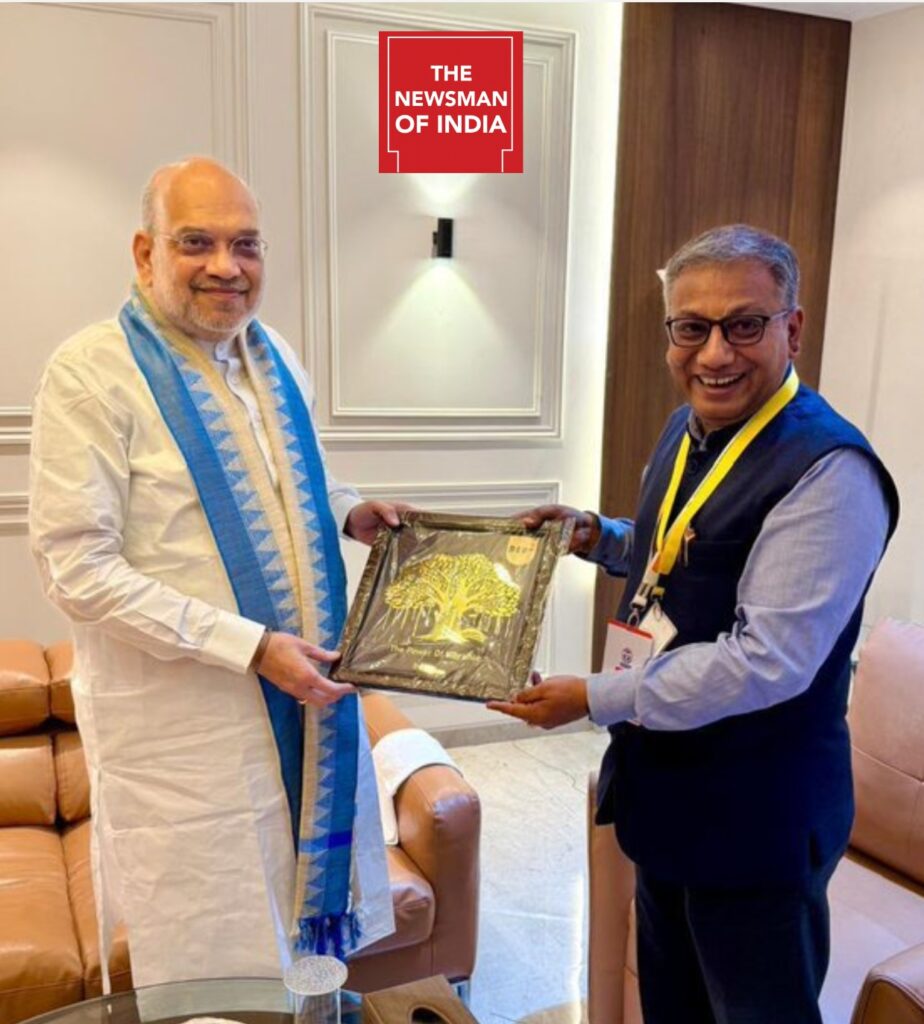
By THE NEWSMAN OF INDIA.COM|BSE Hosts Union Home and Cooperation Minister Amit Shah at Landmark Dialogue on Modernising Cooperative Banking
Mumbai, August 8, 2026: The spirit of cooperative enterprise and financial inclusion received fresh momentum as the Bombay Stock Exchange (BSE) hosted Union Home and Cooperation Minister Amit Shah at the BSE International Convention Centre for “Sahakar Nav-Kranti” on August 8, 2026.
The landmark gathering brought together senior political leaders, policymakers, financial-sector stakeholders and representatives of the cooperative banking ecosystem, underlining the growing importance of urban cooperative banks in India’s financial architecture.
The event was attended by Maharashtra Chief Minister Devendra Fadnavis, Deputy Chief Minister Eknath Shinde and Ashish Shelar, Cabinet Minister of Maharashtra, Guardian Minister of Mumbai Suburban District and Minister for Information Technology (Electronics, IT & AI) and Cultural Affairs, along with prominent representatives from the cooperative banking sector.
The gathering provided an important platform to deliberate on transformative initiatives aimed at strengthening, modernising and enhancing the resilience of urban cooperative banking institutions. With technology, transparency, professional governance and financial inclusion becoming increasingly important to the banking sector, the discussions reflected the changing landscape in which cooperative banks operate.
Urban cooperative banks have historically played a significant role in taking formal banking services closer to citizens, particularly small entrepreneurs, traders, self-employed individuals and local communities. Their deep-rooted presence and community-oriented approach give them a distinctive role in advancing inclusive economic development.
The “Sahakar Nav-Kranti” initiative assumes significance in this broader context. The emphasis on modernisation represents an opportunity to combine the traditional strengths of the cooperative movement with contemporary banking practices, digital technology and stronger institutional frameworks.
The event also highlighted the importance of collaboration between policymakers, financial institutions, market infrastructure institutions and cooperative banking stakeholders. Such partnerships can help create a more efficient and technology-enabled cooperative banking ecosystem while improving customer service and strengthening institutional confidence.
For BSE, hosting the gathering at its International Convention Centre was also symbolic. As one of India’s premier financial market institutions, BSE represents the country’s long journey towards developing sophisticated and globally recognised financial infrastructure. Its engagement with the cooperative banking ecosystem reflects the increasing convergence between traditional financial institutions and modern capital-market and technology-driven platforms.
Sundararaman Ramamurthy, Managing Director and Chief Executive Officer, BSE, welcomed the Union Home and Cooperation Minister and the other distinguished dignitaries. Marking the occasion, he presented Amit Shah with a special BSE 150-year commemorative coin and a memento.
The presentation of the commemorative coin carried particular significance, as BSE’s 150-year journey mirrors the evolution of India’s financial and economic institutions. From the early development of organised securities trading to the contemporary era of technology-driven markets, BSE has remained an important part of the country’s financial history.
The “Sahakar Nav-Kranti” gathering therefore went beyond being a formal industry event. It represented a broader dialogue on how cooperative institutions can be equipped to meet the requirements of a rapidly transforming Indian economy.
The cooperative movement is deeply embedded in India’s socio-economic fabric. Its future growth will increasingly depend on institutions being able to balance community participation with professional management, sound financial practices, technological innovation and regulatory compliance.
Against this backdrop, the focus on modernising urban cooperative banking assumes strategic importance. A stronger cooperative banking ecosystem can contribute significantly to expanding access to financial services, supporting local businesses, empowering communities and strengthening the foundations of inclusive growth.
The Mumbai gathering has thus reinforced a significant message: India’s cooperative sector is not merely preserving its traditional strengths but is preparing for a new phase of institutional transformation.
“Sahakar Nav-Kranti” captures that transition — from conventional cooperative banking towards a more modern, technology-enabled, transparent and resilient ecosystem capable of contributing meaningfully to India’s aspirations for inclusive and sustainable economic growth.