“Khelo India: Powering India’s Sporting Transformation”
Aug 23rd, 2026 6:17 am | By ThenewsmanofIndia.com | Category: SPECIAL NEWS COVERAGE
BY THE NEWSMAN OF INDIA.COM: Khelo India: Transforming Sporting Aspirations into a Powerful Force for National Development, Inclusion and Global Excellence
From Policing to Sports Administration: Mayank Shrivastava’s Vision for a Stronger Khelo India
Interview with Mayank Shrivastava, Deputy Director General, Sports Authority of India
From Policing to Sports Administration: Mayank Shrivastava’s Vision for a Stronger Khelo India ; As India accelerates its journey towards becoming a global sporting powerhouse, effective sports administration has emerged as an important pillar alongside athletic excellence. At the heart of this transformation is the need for professionals who understand governance, discipline, institutional management and the aspirations of young athletes. Mayank Shrivastava, IPS, a 2006-batch officer of the Chhattisgarh cadre, brings a distinctive blend of field experience, public administration and leadership to this evolving landscape. Currently on Central Deputation and serving in a senior responsibility associated with Khelo India, as Deputy Director General-Sports Authority of India
Mayank Shrivastava has been closely involved with the broader vision of strengthening India’s sporting ecosystem.
A decorated police officer, Shrivastava has been awarded the Police Medal for Gallantry twice, in 2010 and 2013, reflecting his record of distinguished service. He has also served as Commissioner, Public Relations, in the Vishnu Deo Sai-led Chhattisgarh Government. In this exclusive interaction with THE NEWSMAN OF INDIA, Mayank Shrivastava discusses his perspectives on sports development, Khelo India, grassroots talent, institutional support and India’s emerging sporting ambitions.
Q1. Mission & Vision:
What is the core vision of Khelo India today, and how is the programme helping transform India’s sporting culture from the grassroots to the global stage?
Answer:
The vision of the Khelo India Scheme is to transform India’s sports landscape and establish sports as a powerful driver of national development, social inclusion, health, education and international excellence.
The recently approved Khelo India Scheme (2026-31) marks a significant evolution in India’s sports development approach. Aligned with the Khelo Bharat Niti 2025 and the National Education Policy 2020, it moves beyond isolated interventions towards an integrated and athlete-centric ecosystem that connects talent identification, coaching, competitions, infrastructure, sports science, technology and athlete support under a unified framework.
A key strength of the new framework is the creation of a structured athlete pathway spanning Foundation, Grassroots, Intermediate and Elite levels, ensuring that talented children are identified early and provided appropriate opportunities for development at every stage. This pathway is supported through schools, Khelo India Centres, feeder schools, training centres, centres of excellence and Olympic-level training environments, enabling sustained athlete progression.
The impact of this structured pathway is already visible through the journeys of several successful athletes. A notable example is Asmita Dey, who was identified and inducted into the Khelo India programme in 2018. Through sustained support under the Khelo India ecosystem, including advanced training at the SAI National Centre of Excellence (NCOE), Bhopal, she progressed steadily through the performance pathway and went on to create history by winning a Gold Medal in Judo at the Commonwealth Games 2026. Her journey reflects the core philosophy of Khelo India: identifying talent early, providing long-term support, and creating clear pathways from grassroots participation to international success.
Q2. Achievements:
What would you identify as Khelo India’s most significant achievements so far in talent identification, athlete development, sports infrastructure and wider participation?
Answer:
Khelo India has emerged as a comprehensive sports development ecosystem that is creating impact across the entire athlete pathway, from grassroots talent identification to international podium performances.
• Olympics, Commonwealth, Asian:
One of the clearest indicators of this success is the presence of 70 Khelo India Athletes (KIAs) in India’s contingent for the Commonwealth Games 2026 which makes 57% of the total contingent across 10 disciplines, namely Athletics, Boxing, Cycling, Gymnastics, Judo, Swimming, Weightlifting, Para Athletics, Para Swimming and Para Powerlifting. These athletes are training across SAI National Centres of Excellence, Sports Training Centres, Khelo India Accredited Academies and other high-performance institutions. 16 KIAs won medals, including 6 Gold, 6 Silver and 4 Bronze medals. Notably, 40% of India’s medals were won by the Khelo India
Athletes.
Importantly, the programme is demonstrating both immediate and long-term athlete development outcomes. For example, Asmita Dey of Judo, a Khelo India Athlete for nearly eight years since her induction in 2018, went on to win a medal at the Commonwealth Games 2026, and became the first judokas to win Gold at CWG.
This talent pipeline has also contributed to India’s elite sporting achievements, with 124 TOPS and Khelo India Athletes winning 42 of India’s 107 medals at the Asian Games 2022, while 28 KIAs represented India at the Paris Olympics 2024 and contributed 3 medals. In the Paralympic ecosystem, 24 Para KIAs participated in Paris 2024 and won 6 medals, demonstrating the impact of the Khelo India framework in nurturing athletes from grassroots to the world stage.
• International Competitions
Khelo India athletes have produced remarkable results across various major international competitions. In Asian Elite Boxing Championships 2026, KIAs secured 3 Gold medals through Vishwanath Suresh, Preeti and Priya, along with 1 Silver medal through Sachin. In Wrestling, Khelo India athletes won 2 Gold and 6 Silver medals at the Senior Asian Championships 2026, demonstrating the long-term impact of sustained athlete support.
• Record Breaking Performances
The programme has also contributed to record-breaking performances. Gurvinder Singh became India’s fastest man with a national record of 10.09 seconds in the 100m at the National Senior Athletics Federation Competition, while Animesh Kujur set a national record of 20.32 seconds in the 200m at the Asian Athletics Championships. Esha Singh created a world record score of 43/50 in the 25m Sports Pistol event at the ISSF World Cup Munich, and Dev Meena established a national record of 5.45m in Pole Vault.
• Youth
At the youth level, Khelo India has created a strong talent pipeline. At the Asian U20 Athletics Championships 2026, Khelo India athletes won 12 medals (6 Gold, 3 Silver and 3 Bronze), highlighting the effectiveness of early talent identification and athlete nurturing mechanisms.
At the grassroots level, Khelo India Centres (KICs) athletes secured 15 international medals, 309 national medals, 61 zonal medals, 526 state-level medals, and 212 district-level medals during FY 2025-26. In addition, KIC athletes recorded 1,110 participations across competitions, reflecting the wide competitive exposure being provided through the grassroots sport’s ecosystem.
At the Khelo India State Centres of Excellence (KISCEs) the athletes secured 4 international medals, 145 national medals, 34 zonal medals, 516 state-level medals, and 18 district-level medals during FY 2025-26. Further, KISCE athletes registered 571 participations across various levels of competition.
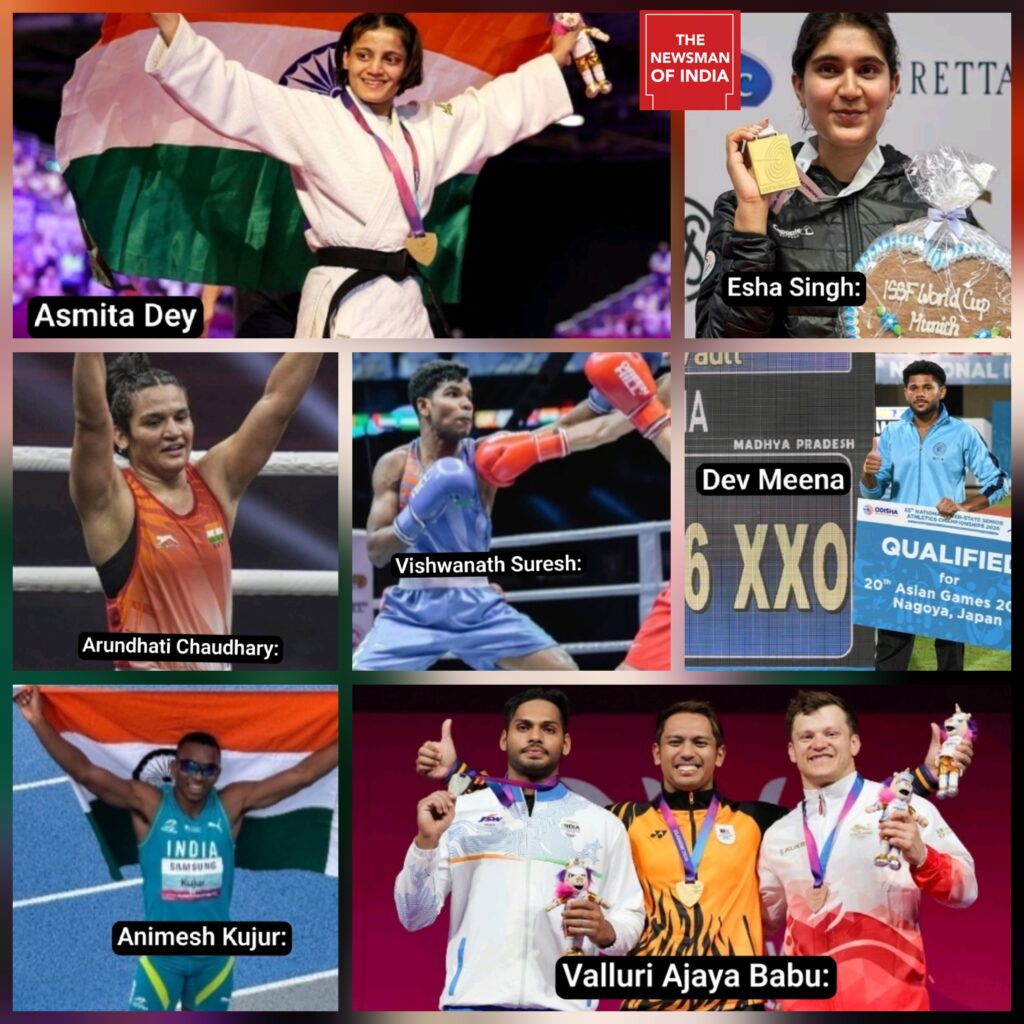
Asmita Dey:Arundhati Chaudhary:Valluri Ajaya Babu:Vishwanath Suresh:Animesh Kujur:Esha Singh:Dev Meena:
Q3. Talent Development
With sustained financial and training support for promising athletes, how is Khelo India ensuring that talented youngsters—particularly from rural and underserved areas—progress to the national and international level
Answer:
Khelo India has established a structured athlete development pathway that identifies talent at the grassroots level and provides continuous support through progressively higher levels of training, competition and performance development. The objective is to ensure that no promising athlete is denied opportunities due to geographical, social or economic barriers.
At the grassroots level, the network of 1,066 Khelo India Centres (KICs) across 759 districts is creating widespread access to quality sports training, particularly in rural, tribal and underserved regions. These centres currently support 28,218 athletes, including 13,874 female athletes, across 41 sports disciplines. To strengthen coaching quality and inspire young athletes, 992 Past Champion Athletes (PCAs) have been engaged as trainers and mentors, bringing valuable competitive experience directly to aspiring sportspersons.
As athletes progress, the 35 Khelo India State Centres of Excellence (KISCEs) established across 34 States and Union Territories provide access to advanced coaching, modern equipment, sports science support and high-performance training environments. To support this ecosystem, 430 high-quality manpower positions have been sanctioned across these Centres, helping bridge critical gaps in sports infrastructure and technical expertise at the state level.
For athletes demonstrating higher performance potential, the Khelo India programme provides focused support through a network of 364 accredited training facilities and academies across the country. Presently, 2,786 Khelo India Athletes (KIAs) are receiving comprehensive assistance across 22 sports disciplines, including para sports. Each athlete is supported through an integrated package covering coaching, competition exposure, sports science services, equipment, boarding and lodging, with funding support of up to ₹6.28 lakh per athlete per annum in residential training programmes.
Khelo India Events have emerged as a powerful platform for talent identification, competitive exposure and the promotion of a vibrant sporting culture across the country. Through flagship competitions, the programme provides athletes with structured opportunities to compete at high levels from an early age. These events bring together thousands of athletes from diverse regions and backgrounds, enabling talent scouting, performance benchmarking and athlete progression into national training pathways. Beyond competition, Khelo India events have contributed significantly to strengthening sports ecosystems in host states, enhancing public participation in sports and creating a nationwide movement that celebrates excellence, inclusivity and the pursuit of sporting achievement.
Q4. Inclusion & Participation:
How is Khelo India expanding participation among women, persons with disabilities, tribal and indigenous communities, and young people from diverse regions across the country?
Answer:
Inclusion and equitable access are central to the vision of Khelo India. The programme is designed to ensure that sporting opportunities reach every segment of society, irrespective of gender, geography, socio-economic background or physical ability, thereby enabling sports to become a truly national movement.
Special emphasis has been placed on increasing participation of women and girls through enhanced access to training infrastructure, competitions, coaching support and athlete scholarships. This is reflected in the strong representation of female athletes across the Khelo India ecosystem, with 13,874 girls and women currently training in Khelo India Centres (KICs) across the country. Dedicated initiatives such as the ASMITA League (Achieving Sports Milestone by Inspiring Women Through Action) have further expanded competitive opportunities and fostered greater participation of women in sports.
Khelo India has also played a significant role in strengthening opportunities for athletes with disabilities. Through the Khelo India Para Games and the inclusion of para disciplines within athlete development programmes, talented para-athletes are being identified, nurtured and supported through structured training, competition exposure and sports science services. This inclusive approach has contributed to the emergence of several para-athletes at national and international competitions.
Khelo India has placed special emphasis on expanding sporting opportunities in tribal, indigenous and geographically remote regions of the country. To promote sports participation among tribal youth, 174 Khelo India Centres (KICs) dedicated to tribal communities have been established across the country, covering 18 sports disciplines, namely Athletics, Archery, Badminton, Boxing, Football, Hockey, Kabaddi, Kho Kho, Wrestling, Volleyball, Table Tennis, Judo, Shooting, Weightlifting, Rugby, Wushu, Mallakhamb and Yogasana. Further, to address regional disparities and enhance sports access in strategically important and remote areas, districts in the Northeastern States, Andaman & Nicobar Islands and Jammu & Kashmir are provided support for up to 2, 3 and 5 Khelo India Centres respectively, as against the general norm of one KIC per district. This targeted approach ensures that talented athletes from tribal, rural and aspirational regions receive access to quality coaching, infrastructure and competitive opportunities closer to their homes.
In addition, Khelo India events such as the Khelo India Tribal Games, Youth Games, University Games, Para Games and Winter Games provide athletes from diverse backgrounds and regions with opportunities to compete at national platforms, gain exposure and showcase their talent. The inaugural Khelo India Tribal Games were organized in 2026, creating for the first time a dedicated national multi-sport platform for tribal athletes from across the country. Held in Chhattisgarh, the Games brought together over 2,000 athletes, across 7 sports disciplines, namely Archery, Athletics, Football, Hockey, Swimming, Weightlifting and Wrestling, while also showcasing indigenous sporting traditions through demonstration events. The Games represent a significant step towards identifying and nurturing sporting talent within tribal communities while celebrating India’s rich tribal heritage and traditional sporting culture. Through this comprehensive approach, Khelo India is fostering a more inclusive sporting ecosystem that reflects India’s diversity and ensures that talent, wherever it exists, is identified and supported to achieve excellence.
Q5. Future Targets:
Looking ahead, what are the key targets and priorities for the Khelo India Division over the next three to five years, particularly in preparing India for major international sporting competitions?
Answer:
Over the next three to five years, Khelo India will focus on building a sports culture & ecosystem that systematically identifies, nurtures and supports athletes from the grassroots to the elite level, in line with the vision of the Khelo India Scheme 2026-31, Khelo Bharat Niti 2025 and the goal of enhancing India’s performance at the Olympic Games, Paralympic Games, Asian Games and other major international competitions.
A key priority will be the implementation of a structured four-tier athlete pathway comprising Foundation, Grassroots, Intermediate and Elite levels, ensuring that talent is identified early and provided appropriate support at every stage of development. At the Foundation and Grassroots levels, the focus will be on integrating sports with education through the development of Khelo India Utkrishta Vidyalayas, Khelo India Feeder Schools and Khelo India Centres, creating a strong pipeline for talent identification and nurturing. Athletes demonstrating higher potential will then progress through SAI Training Centres (STCs), Khelo India Centres of Excellence, National Centres of Excellence, Khelo India Accredited Academies and other high-performance training environments, ensuring seamless progression towards elite sport.
The Scheme also envisages a science-based and technology-enabled talent identification framework supported through Talent Scouts, Talent Identification Zonal Committees (TIZCs), national-level Talent Identification and Development Committees, standardized testing protocols, periodic assessment camps, performance monitoring systems and digital athlete management platforms. This will help ensure that talented athletes, irrespective of their geographical or socio-economic background, are identified and supported through a transparent and merit-based process.
Another major priority will be strengthening India’s sports infrastructure and training ecosystem through continued investments in Khelo India Centres, Khelo India State Centres of Excellence, Accredited Academies, High Performance Centres and Olympic Training Centres, while integrating sports science, sports medicine, nutrition, psychology, strength and conditioning, athlete welfare and technology-enabled monitoring across the athlete pathway.
Simultaneously, Khelo India will continue to expand its competition structure through flagship events such as the Khelo India Youth Games, University Games, Para Games, Winter Games, Beach Games and Tribal Games, providing athletes with regular competition exposure and creating a strong pipeline of competition-ready athletes for national and international events.