Top Management’s Progressive Banking Approach Strengthens Union Bank of India’s Growth Story
Apr 27th, 2026 1:14 pm | By ThenewsmanofIndia.com | Category: LATEST NEWS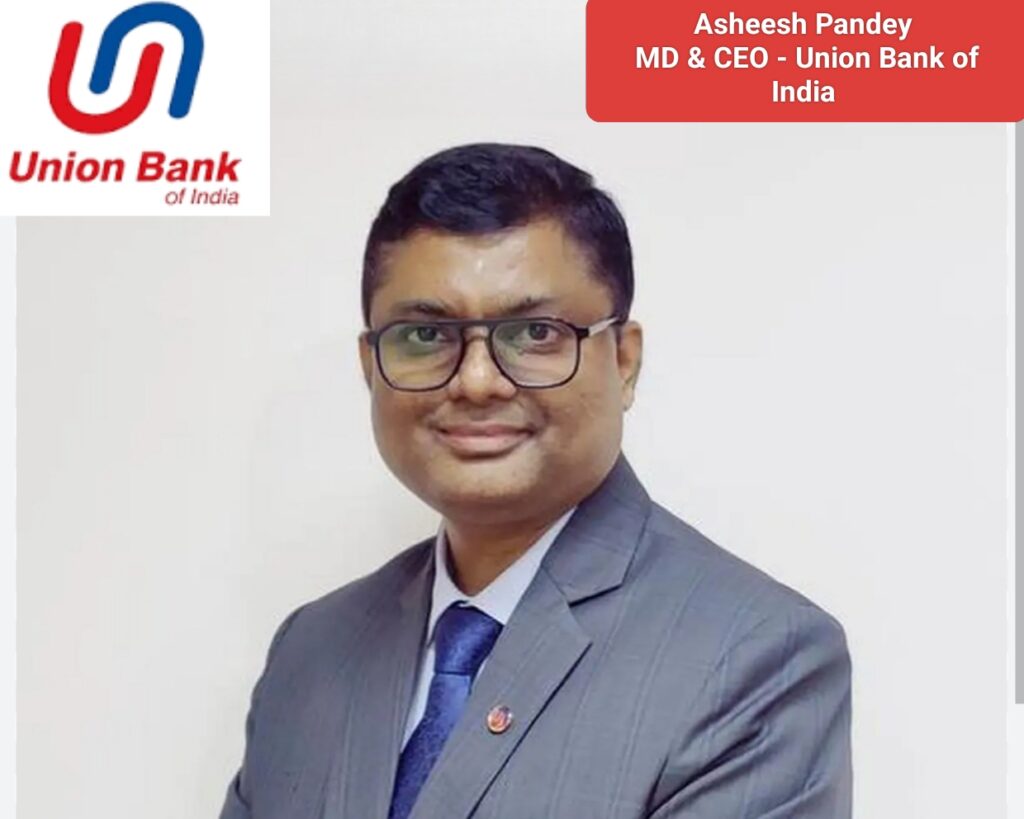
By THE NEWSMAN OF INDIA.COM|New Delhi: In an environment where banking leadership is increasingly judged by strategic clarity rather than short-term expansion, Union Bank of India’s Managing Director & CEO Asheesh Pandey is steering the institution with a distinctly progressive and disciplined approach. His focus on sustainable growth, prudent liability management, and stronger retail banking foundations is gradually reshaping the bank’s financial architecture.
Rather than pursuing aggressive deposit accumulation at any cost, Pandey has chosen a more calibrated path—prioritising quality over quantity. His strategy reflects a deeper understanding of long-term banking stability, where the cost of funds and the strength of the deposit base matter far more than headline numbers alone.
One of the most notable decisions under his leadership has been the conscious reduction of high-cost bulk deposits. These deposits, largely contracted during an earlier high-rate cycle at pricing levels of nearly 7.8 to 7.9 per cent, were putting pressure on margins and profitability. Recognising the need for structural correction, the bank undertook a major liability clean-up exercise.
Union Bank of India reduced bulk deposits by nearly Rs 73,000 to Rs 75,000 crore as part of this strategic shift. In Q4 FY26 alone, the reduction stood at nearly Rs 30,000 crore, following an earlier cut of approximately Rs 40,000 crore in Q3. This was not merely a balance sheet adjustment, but a carefully planned move to transition towards a healthier and more cost-efficient funding profile.
Importantly, the bank ensured that this transition did not compromise liquidity. With a Liquidity Coverage Ratio (LCR) of 113.8 per cent, Union Bank maintained a strong liquidity cushion, reflecting both confidence and sound treasury discipline.

Pandey’s vision extends beyond reducing expensive liabilities. His larger objective is to strengthen the bank’s CASA (Current Account Savings Account) and retail deposit franchise, creating a more stable and lower-cost resource base. This reflects a fundamental banking principle: sustainable growth comes from trust-based retail relationships, not dependence on volatile bulk funding.
Under this strategy, the bank successfully mobilised over Rs 1.05 lakh crore through CASA growth and retail term deposits. The CASA ratio rose to 35.21 per cent, improving by 170 basis points year-on-year. This improvement is significant because it directly supports profitability by reducing funding costs while enhancing long-term customer stickiness.
The results of this disciplined approach are already visible. Despite industry-wide deposit pressures, Union Bank was able to sustain and improve its Net Interest Margin (NIM), which rose to 2.7 per cent in Q4 FY26 from 2.64 per cent in the previous quarter. This demonstrates how effective liability repricing and deposit substitution can protect profitability without compromising business momentum.
Pandey’s banking philosophy is clear: deposits are available in the market, but building CASA is the real challenge. This perspective reflects a mature understanding of banking fundamentals and a refusal to chase short-term volume at the expense of long-term resilience.
Financial performance further reinforces the success of this leadership model. Union Bank of India reported a net profit of Rs 5,316 crore, registering a 6.6 per cent year-on-year increase, while operating profit rose sharply by 14.6 per cent quarter-on-quarter to Rs 7,955 crore. Net interest income remained stable at Rs 9,406 crore, indicating consistency in core banking operations.
Equally encouraging is the continued improvement in asset quality. Gross Non-Performing Assets (GNPA) declined to 2.82 per cent, while Net NPA fell to just 0.48 per cent. A low credit cost of 0.16 per cent further signals stronger risk management and healthier lending practices.
Business growth remains steady, with advances rising 9.7 per cent year-on-year and global deposits reaching Rs 13.06 lakh crore. The credit-deposit ratio at 80.40 per cent reflects balanced credit deployment and resource management.
What stands out in Asheesh Pandey’s leadership is not dramatic rhetoric, but methodical execution. His approach reflects institutional strengthening rather than temporary performance boosts. By focusing on lower-cost deposits, stronger margins, cleaner books, and stable growth, he is building a stronger and more resilient Union Bank of India.
In today’s banking landscape, where sustainability often outweighs speed, Asheesh Pandey’s measured and progressive stewardship offers a model of leadership rooted in prudence, foresight, and financial discipline. Under his guidance, Union Bank of India is not merely growing—it is growing with greater strength and stability.